Running operations has become more difficult than it used to be? Then don’t worry because it is the same for most growing businesses. They reach a stage where everything breaks down and doesn’t work anymore. At Connect Solution, we work with businesses facing these exact operational challenges, helping them replace disconnected processes with integrated ERP solutions that improve efficiency and visibility. You will find your warehouse personnel maintaining your inventories on a spreadsheet, which does not reflect the reality at all.
When every team operates in its own little world, you spend more time fixing preventable internal mistakes than actually growing the business. That’s where real digital transformation comes in and why an enterprise resource planning (ERP) system is usually the foundation that makes it happen.
What Does ERP-Driven Transformation Actually Look Like?
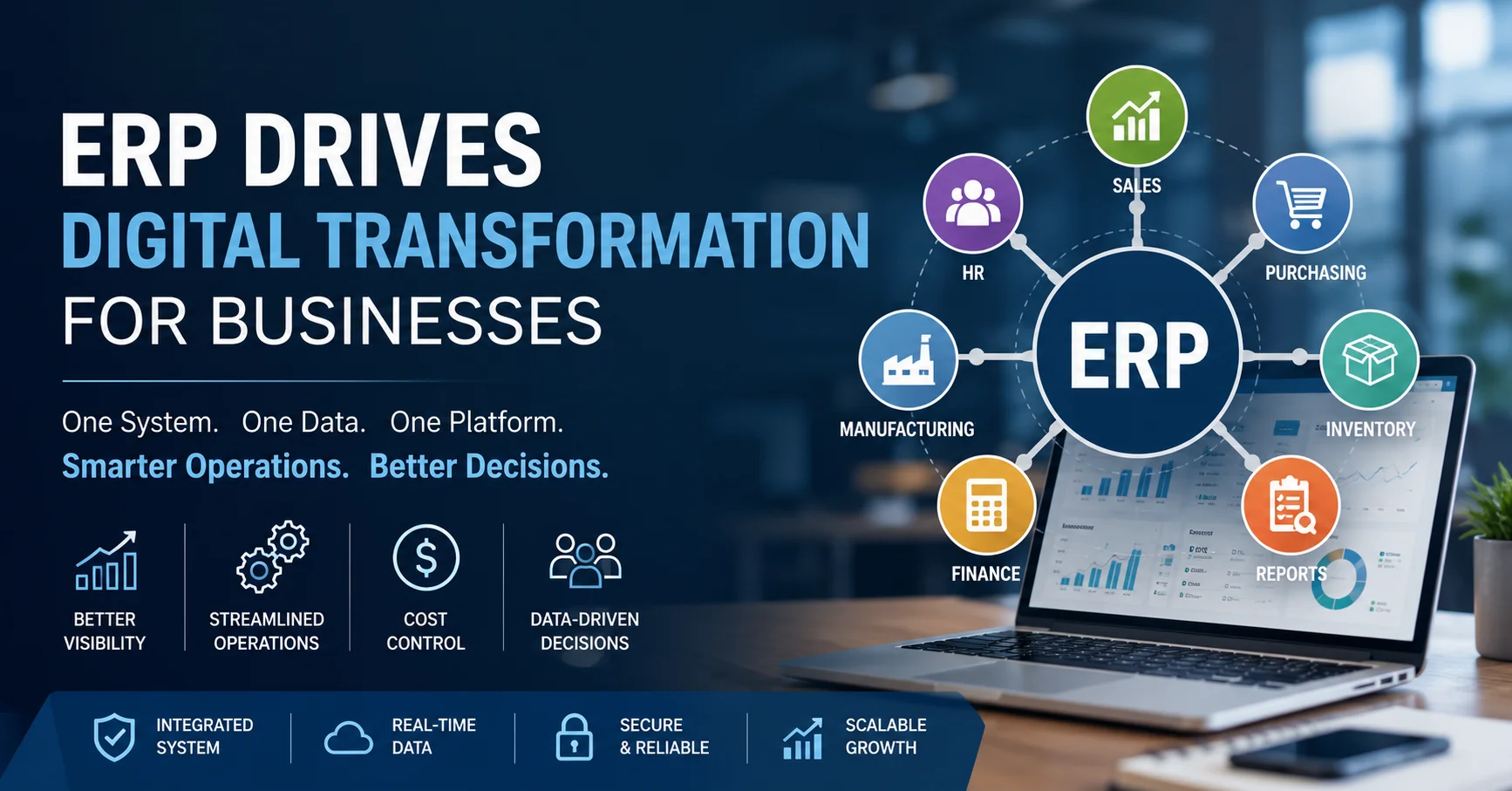
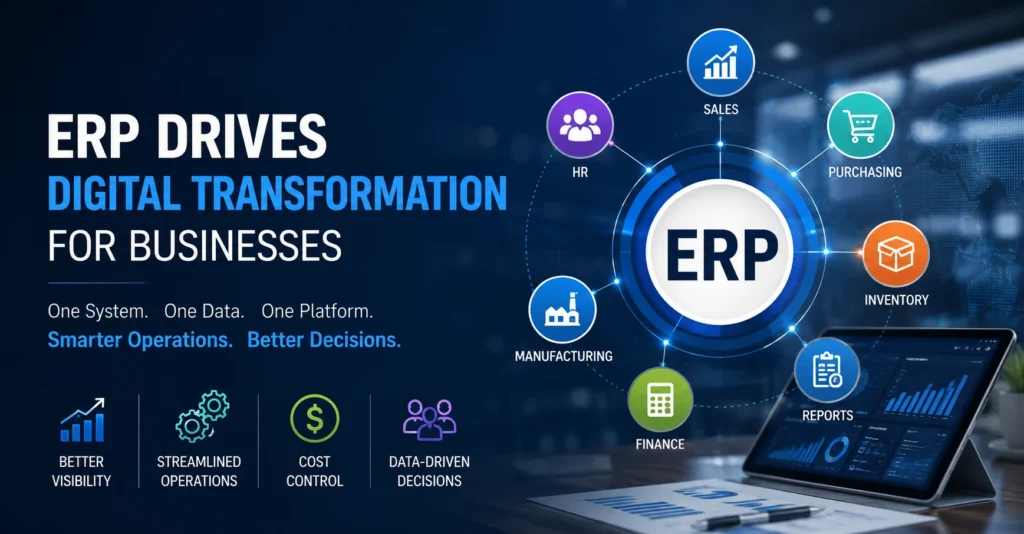
Putting aside the corporate language, the implementation of an ERP system is simply joining all of the dots in your organization.
Instead of conducting sales through one application, keeping inventory in spreadsheets, and maintaining accounts using some other accounting software, ERP brings all of this together into one place. As soon as your sales representative makes a sale, it is seen immediately by your warehouse; inventory adjusts itself automatically, and finance can see the amount of income that will be generated from the sale instantly.
In essence, ERP is an operational engine of your business. It takes care of all of your boring administrative processes and ensures that everyone is looking at the very same figures to base decisions upon.
Practical Upgrades You Notice Immediately
When you replace manual habits and scattered files with a connected system, several core areas of your business get an instant boost:
- Smooth Purchase Approvals: Requisitions don’t get lost on someone’s desk anymore. Managers get a quick alert, approve the spend from their phone, and purchase orders go straight to suppliers.
- A Single Source of Truth: Your warehouse, sales team, and accounting books stay tied together live, so nobody has to waste time asking around for routine updates.
- Automatic Spending Guardrails: Built-in rules check departmental budgets before money leaves your account, stopping off-budget orders in their tracks.
- Smarter Inventory Control: Instead of guessing what to reorder, the system looks at real historical usage patterns so you order what you need, right when you need it.
- Clear Vendor Accountability: Simple dashboards track which suppliers deliver on time, charge what they quoted, and consistently meet your quality standards.
Hidden Problems That Quietly Drain Your Margins
If your business still runs on paper sign-offs and disconnected software, these day-to-day headaches will sound way too familiar:
- Off-Contract Spending: Employees buying outside preferred vendor networks, missing out on pre-negotiated rates and wasting company funds.
- Frustrating Data Errors: Re-keying numbers from paper receipts into spreadsheets leads to tiny typos that take hours to track down later.
- Information Trapped in Silos: When departments hoard their own data, negotiating better supplier contracts or forecasting cash flow becomes pure guesswork.
- Accidental Double Orders: Separate sites order the same supplies independently because neither knew the other was buying them.
- Capital Tied Up in Stock: Ordering based on gut feel leaves cash locked up in slow-moving items while your best-sellers run out.
Old Operational Habits vs. Running on an ERP
| Operational Area | Old / Manual Setup | ERP-Driven Enterprise |
| Approvals | Paper forms, sticky notes, and long email chains | Automated approval paths straight to managers |
| Visibility | Outdated monthly reports and scattered spreadsheets | Live spend analytics on a single dashboard |
| Purchasing | Slow PO creation with constant risk of typos | Instant, automated purchase order generation |
| Vendor Management | Scattered notes and zero real accountability | Clear supplier scorecards based on actual delivery data |
| Inventory Control | Reordering based on gut feel and guesses | Data-backed material planning with automatic reorder points |
How Information Actually Flows in a Clean System
1. Gives Everyone the Same Picture
When your warehouse, customer records, and accounting live in one system, everyone works off identical figures. Sales won’t promise stock that warehouse teams just shipped out, and finance won’t get caught off guard by unexpected vendor bills at the end of the month.
2. Cuts Out Hours of Administrative Friction
Automating routine requisitions removes stacks of paper forms and eliminates the need to hunt down managers in hallways. Requests move smoothly from approval to fulfillment without getting stuck along the way.
3. Shows You Exactly Where Money Goes
Clear procurement analytics give leadership an immediate view of spending habits. You can compare raw material costs against daily operational expenses to spot quick savings and negotiate better bulk pricing.
4. Catches Unapproved Expenses Upfront
Rules-based approval paths stop rogue expenses before they happen. The system validates every request against remaining department budgets before a purchase order can even be drafted.
5. Helps You See Your True Costs
Good software looks beyond the initial shelf price. It factors in shipping fees, customs duties, storage, and ongoing maintenance, giving you the real total cost of ownership (TCO) so you know your exact profit margins.
Which Industries Gain the Most?
- Manufacturing: Connects raw material stock straight to shop floor schedules so production lines don’t grind to a halt waiting on missing parts.
- Retail & Wholesale: Syncs physical store shelves and e-commerce channels automatically so stock reorders happen effortlessly.
- Construction: Tracks job-site materials, subcontractor invoices, and equipment rentals in real time against original project budgets.
- Distribution & Logistics: Coordinates delivery vehicle maintenance with warehouse restocking to ensure shipments go out on schedule.
4 Rules for a Successful Transition
- Fix Broken Processes First: Map out your team’s real workflows before setting up software. Digitizing a broken process just gives you a fast, broken digital process.
- Focus on Metrics That Matter: Keep an eye on supplier lead times, delivery accuracy, price variations, and how fast approvals get done.
- Keep Teams Accountable: Make sure staff aren’t slipping back into old habits, like keeping private spreadsheets on their desktops.
- Train Your People Well: Show your staff how the new system makes their daily jobs easier. When software saves people time, adoption happens naturally.
Ready to Take Control of Your Operations?
Stop letting manual steps and hidden inefficiencies slow down your company’s growth. We help businesses streamline daily operations, stop budget leaks, and gain full visibility with clear, simple ERP solutions.
Let’s talk about how we can help your business:
Call: +92 300 1110365
Email: info@connect-sol.com
Frequently Asked Questions
How does an ERP support digital transformation?
An ERP acts as the operational foundation for your business. It replaces scattered spreadsheets and paper trails with a single system that connects every department, automates repetitive tasks, and keeps your data clean.
What is the main benefit of process automation in an ERP?
It handles routine tasks automatically, like drafting purchase orders, routing spending requests to managers, updating inventory levels, and checking budgets, saving your team hours of manual work every week.
How does an ERP keep departments from working in isolation?
Since every team enters and views data in the same system, everyone sees the same figures in real time. Sales, finance, and warehouse teams stay aligned without back-and-forth email chains.
What’s the difference between cost savings and cost avoidance?
Cost savings directly reduce current bills (like getting a discount on raw materials). Cost avoidance stops unexpected future costs (like catching duplicate orders, avoiding rush delivery charges, or flagging vendor price mistakes early).
Can an ERP help my company scale without hiring a huge admin team?
Yes. Because the system automates heavy admin work and simplifies workflows, your existing team can handle significantly higher order volumes without getting overwhelmed by extra paperwork.