If your sales sit in one sheet, stock in another and accounts in a third, you already know the pain. Someone always has an older version. ERP software fixes this by putting every department on one system with one set of numbers. Connect Solutions works with businesses in the UAE and Pakistan, and the same questions come up again and again. Is ERP worth it? What do we actually get? Here are 10 benefits that matter in real day to day business management, plus a few honest warnings.
What Is ERP Software?
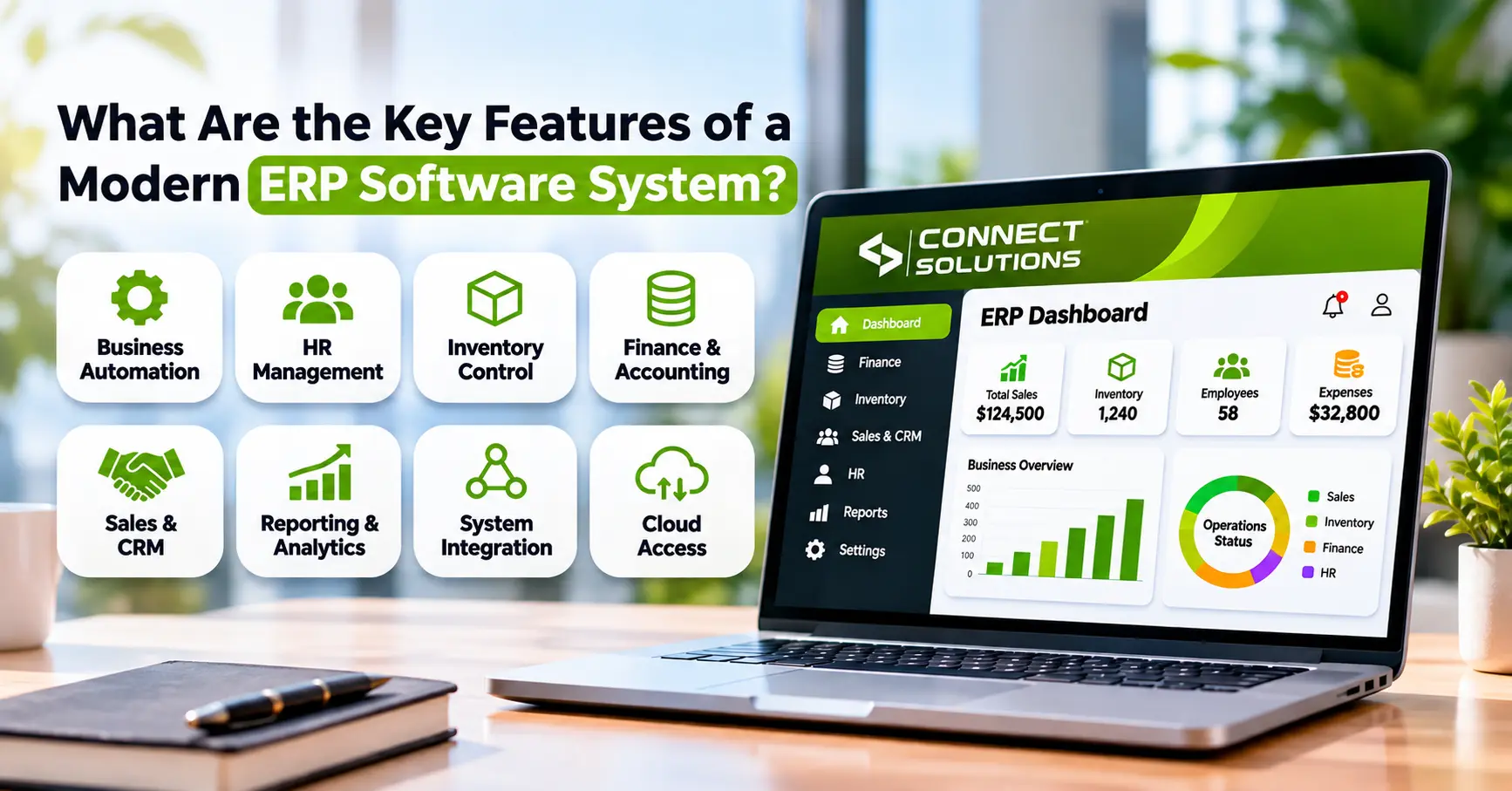
ERP stands for enterprise resource planning. ERP software is a business system that connects finance, sales, inventory, HR and purchasing in one database, so every team works from the same data. Think of it as one shared notebook for the whole company, instead of ten private ones. Common modules include accounting, inventory, sales, purchasing, HR and payroll, and reporting.
Cloud or On-Premise?
Cloud ERP runs on the provider’s servers and you log in from anywhere. On-premise ERP runs on your own servers. Hybrid mixes both. Many small and mid-size businesses lean towards cloud because it needs no server room and updates itself.
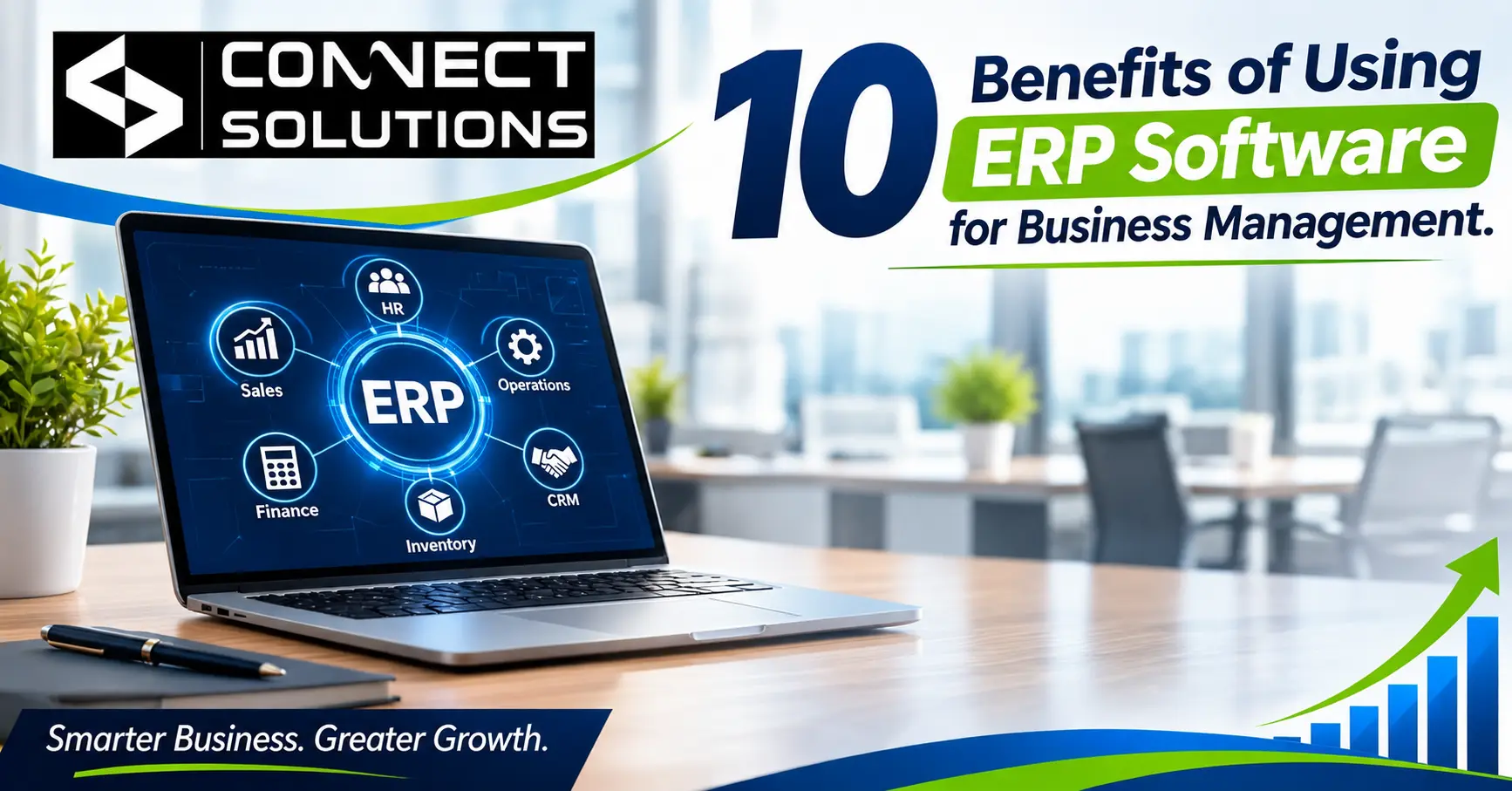
10 Benefits of ERP Software
1. One Source of Truth
Everyone sees the same numbers. Sales cannot quote stock that finance already sold. This is the biggest win, because most business arguments start with two different spreadsheets. When data lives in one centralized database, meetings get shorter and decisions get faster.
2. Less Manual Work and Fewer Errors
Typing the same invoice into three places is slow and risky. With process automation, one entry flows to accounts, stock and reports. Your team spends less time copying and more time selling or serving customers. Fewer typos also means fewer awkward calls with clients.
3. Real-Time Reports You Can Trust
Month end used to mean waiting a week for numbers. Now the real-time dashboard shows sales, cash and stock today. A business owner in Lahore or Dubai can check performance from a phone and act the same day, not next month.
4. Better Inventory Control
Overstock ties up cash. Stockouts lose customers. Inventory management inside ERP shows what you have, where it sits and what is running low. Reorder alerts help you buy at the right time, which matters a lot when suppliers are overseas and shipping takes weeks.
5. Easier VAT and Tax Compliance
In the UAE you file VAT returns with the Federal Tax Authority. In Pakistan you deal with the FBR and sales tax records. ERP keeps invoices, tax rates and audit trails in order, so filing is not a last minute scramble. Multi-currency support for AED, PKR and USD helps too.
Not sure which modules your business needs first? Talk to the Connect Solutions team and get a clear plan, not a sales pitch. Call +92 300 1110365 or +971 457 13703.
6. Lower Running Costs
Several tools mean several licences and several vendors to call. One ERP system replaces many small apps. You also stop paying for rework caused by wrong data. Cloud ERP removes the need for your own server room, which helps when load shedding or power cuts hit the office.
7. Smoother Teamwork Between Departments
When finance can see the sales pipeline and the warehouse can see new orders, handoffs stop breaking. Workflow approvals run inside the system, not in WhatsApp chats. Nobody needs to ask where a file is, because the answer is on screen.
8. Stronger Security and Control
Spreadsheets can be copied, edited and lost. ERP gives role-based access, so each person sees only what their job needs. Every change leaves a record. That audit trail protects you from mistakes and from internal fraud.
9. Better Customer Service
Customers do not care about your systems. They care about fast answers. With order history, stock and billing in one place, your team can reply in minutes. Integrated CRM data also shows who your repeat buyers are, so you can look after them.
10. Room to Grow
A new branch, a new city, a new product line. A scalable ERP lets you add users and modules without starting over. Many UAE and Pakistani businesses grow across both markets, and one system with multi-branch and multi-currency support makes that far easier.
A Simple Example
Picture a trading company with an office in Karachi and a warehouse in Sharjah. Orders come by WhatsApp, stock sits in Excel, and invoices are typed twice. A customer orders 200 units, but 50 were sold yesterday. With ERP, that order checks live stock first, raises the invoice in the right currency and updates the books. No calls, no guessing.

Spreadsheets vs ERP at a Glance
| Task | Spreadsheets | ERP software |
| Stock count | Updated by hand | Updates with every sale |
| Month end report | Takes days | Ready on screen |
| Tax filing | Manual checking | Pulled from invoices |
| Who changed this? | No idea | Full audit trail |
Signs You Have Outgrown Spreadsheets
- Month-end close takes more than a few days
- Two people give you two different sales figures
- You hold stock you cannot find, or sell stock you do not have
- Tax filing feels like a scramble each quarter
If two or more sound familiar, it is time to look at ERP.
What ERP Will Not Fix
ERP is not magic. It will not fix a messy process, it just makes the mess faster. Clean up how you work first. Also plan for staff training and data migration, because a good system used badly gives bad results. Pick a partner who stays after go-live.
How to Choose the Right ERP Partner
Ask these before you sign:
- Do they understand UAE and Pakistan tax rules?
- Will they migrate your old data?
- Is training included?
- What does support look like after go-live?
- Can you start with a few modules and add more later?
Frequently Asked Questions
What is ERP software in simple words?
ERP software in simple words is one system that runs your finance, sales, stock and HR from a single database.
Is ERP software only for big companies?
ERP software is not only for big companies, because small and mid-size businesses use cloud ERP to leave spreadsheets behind.
What are the main benefits of ERP for business management?
The main benefits of ERP for business management are one source of data, less manual work, real-time reports and better control.
Can ERP software handle VAT in the UAE?
ERP software can handle VAT in the UAE by calculating tax on each invoice and keeping records ready for the Federal Tax Authority.
Is cloud ERP better than on-premise ERP?
Cloud ERP suits most growing businesses because it costs less upfront and works from anywhere.
Final Thoughts
ERP will not run your business for you, but it removes the daily friction that slows good teams down. One source of data, fewer errors, faster reports and cleaner tax records add up quickly. Start small, fix your processes, and add modules as you grow. If you want a straight answer on what fits your business, we are happy to talk it through.
Ready to see what ERP can do for your business? Talk to Connect Solutions. Pakistan: +92 300 1110365. UAE: +971 457 13703. Email: info@connect-sol.com.